

Colleges are dropping application essays, but it is not good news for students.
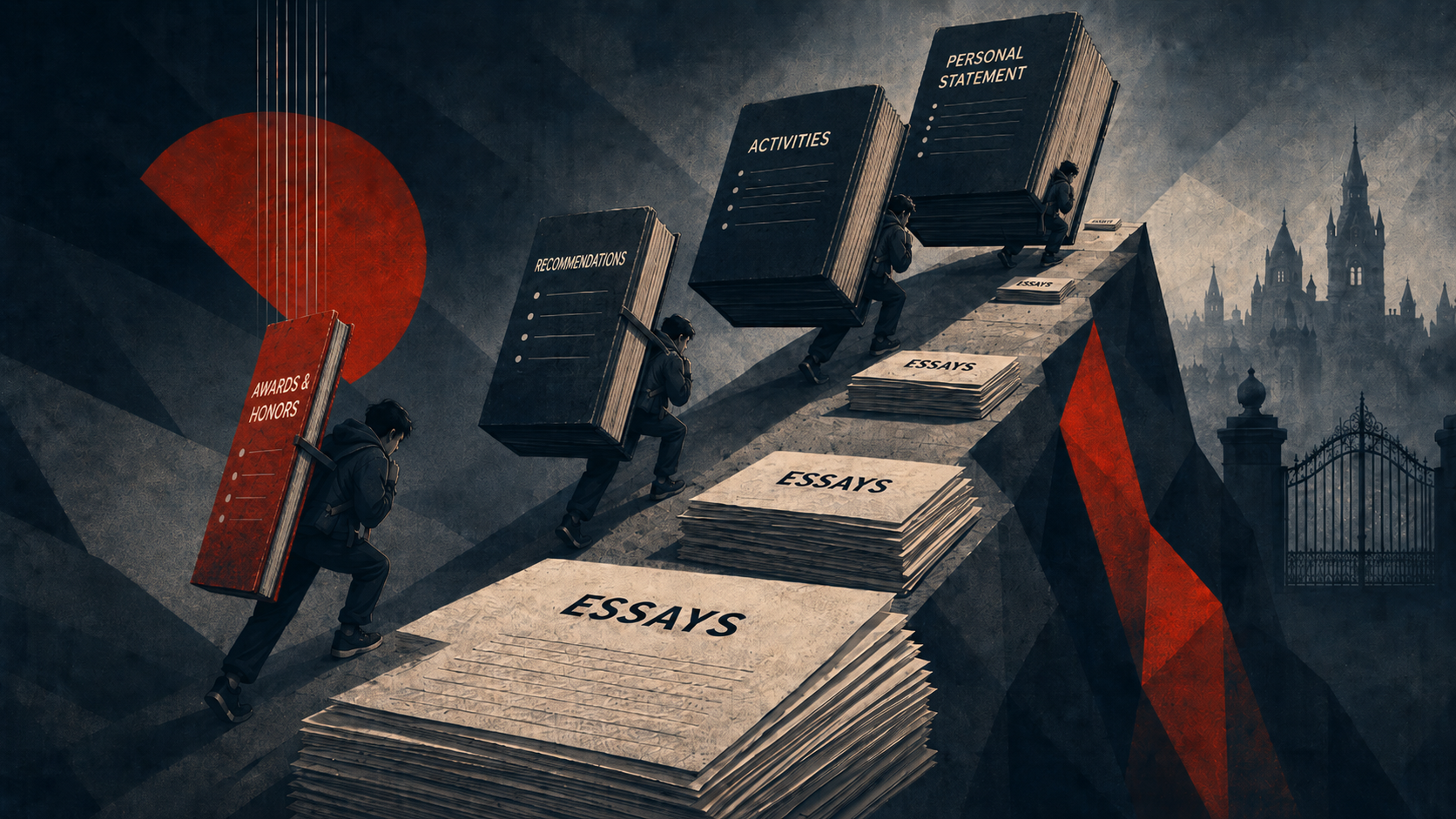
Colleges are dropping application essays, and the reason why is not what most families think.
At first glance, it sounds like good news.
One less essay. One less deadline. One less late-night argument between a parent and a student over whether a 250-word response sounds “authentic” enough. For families already overwhelmed by the college admissions process, the announcement that schools like the University of Georgia, UNC Chapel Hill, and Tulane are eliminating certain supplemental essay requirements may feel like a small mercy.
It is not.
From where we sit, working every year with students applying to Ivy League and top colleges, this change should not make families relax. It should make them pay closer attention.
Because when selective colleges remove supplemental essays, they are not removing the need for strategy. They are removing space. And in college admissions, space is opportunity.
Fewer essays means fewer opportunities to explain who a student is, why they matter, what they will contribute, and why a college should choose them over thousands of other highly qualified applicants.
That is not easier.
That is far more dangerous.
The Public Explanation Sounds Simple. The Real Explanation Is Not.
The internet has already decided what this means.
Some people say colleges are dropping supplemental essays because of artificial intelligence. They argue that ChatGPT has made it impossible to know what students actually wrote, so admissions offices are giving up on student writing altogether.
That explanation is neat. It is dramatic. It is also too simple.
Colleges are not suddenly discovering that students use outside help, grammar tools, tutors, parents, consultants, editors, and now artificial intelligence. Admissions offices have understood for years that essays are not written in a vacuum. The best admissions readers are not simply judging whether a sentence is pretty. They are looking for substance.
They are looking for evidence.
They are looking for the specific details of a student’s life, mind, choices, values, and impact.
A machine may polish language. A parent may suggest a better transition. A consultant may help a student find the right story. But the underlying identity of the student still has to be real. The admissions file still has to hold together.
The deeper reason colleges are cutting essays is more practical and more concerning: the admissions system is overloaded.
Application numbers have exploded. Test-optional policies, the ease of the Common App, and rising admissions anxiety have encouraged students to apply to more colleges than ever before. Meanwhile, the number of admissions officers reading those files has not increased at the same pace.
That creates a math problem.
If a college receives tens of thousands of applications, every additional supplemental essay adds thousands of hours of reading. At a certain point, the question inside the admissions office becomes brutally simple: Which parts of the application are truly worth the time?
That is why supplemental essays are being cut.
Not because student narrative no longer matters.
Because colleges are trying to read faster.
Faster Admissions Is Not Better for Students
This is where families need to be very careful.
When colleges remove essays, they are not necessarily making the process more humane. They are making it more efficient.
Efficiency may help admissions offices. It does not always help applicants.
A student used to have multiple chances to reveal different sides of themselves. The Common App personal statement might show character. A “Why Major?” essay might show intellectual direction. A “Why Us?” essay might show fit. A community essay might show values. A short answer might add humor, personality, or specificity.
Now, in some cases, those extra windows are closing.
That means the remaining parts of the application must do more work.
The personal statement has to carry more weight. The activities list has to become more strategic. The additional information section has to be used more carefully. The recommendation letters have to reinforce the right story. The major selection has to make sense. The resume, awards, coursework, testing decisions, and application positioning all have to point in the same direction.
At The Ivy Institute, this is exactly why we have always believed that college admissions is not just an essay-writing process. It is an application strategy process.
The essay is only one part of the file.
The real question is whether the entire application creates a clear, memorable, and compelling admissions identity.
The Common App Essay Just Became More Important
For many families, the Common App personal statement has always felt important.
Now, it may become the single most important narrative document a student submits.
If a college removes its supplemental essays, the personal statement may be the only real place where a student can speak in their own voice. That one essay may need to reveal character, maturity, intellectual curiosity, emotional depth, personal context, future direction, and distinction from the rest of the applicant pool.
That is an enormous burden for 650 words.
And this is where many strong students make the biggest mistake.
They write a nice essay.
They write a polished essay.
They write an essay that is well-structured, grammatically clean, and emotionally pleasant.
But “nice” is not enough in elite college admissions.
A nice essay does not necessarily create a reason to admit. A polished essay does not necessarily create differentiation. A touching story does not necessarily communicate a student’s academic direction, leadership potential, or campus contribution.
When supplemental essays disappear, the personal statement cannot simply be good writing. It has to become strategic writing.
It has to answer the question that the rest of the application may no longer have room to answer:
Why this student?
The Activities List Is Now a Strategic Document
The activities section is also becoming more important.
Many students treat the Common App activities list like a basic inventory. They list clubs, titles, hours, and awards. They assume admissions officers will understand the significance.
They usually will not.
Admissions officers are reading quickly. They are comparing students with similar grades, similar scores, similar activities, similar service work, similar internships, similar research, and similar leadership titles.
That means the activities list cannot simply say what a student did.
It has to show impact.
It has to show scale.
It has to show initiative.
It has to show why the student’s work mattered and how it connects to the larger application narrative.
When supplemental essays are removed, those 150-character activity descriptions become some of the most valuable real estate in the entire application. Every word has to be chosen with intention. Every description has to help build the student’s larger story.
This is one of the areas where strategic admissions guidance matters most. Not because a consultant can invent a student’s achievements, but because most students do not know how to translate what they have done into the language of admissions value.
They undersell themselves.
They describe instead of position.
They list instead of prove.
And in a more compressed application process, that can be fatal.
The Application Has to Work as One Argument
The biggest misconception in college admissions is that students are admitted because they have a collection of strong parts.
Strong GPA. Strong test scores. Strong essays. Strong activities. Strong recommendations.
But at the most selective colleges, strong parts are common.
What is rare is coherence.
The students who stand out usually have an application that works as one unified argument. Their academic interests, activities, essays, recommendations, awards, and future goals all reinforce one another. The admissions officer finishes the file with a clear understanding of who the student is and why that student belongs in the class.
At The Ivy Institute, we often describe this as a student’s application identity.
It is not a gimmick. It is not a fake brand. It is not forcing a teenager into a box.
It is the process of identifying the most compelling, distinctive, and strategically valuable parts of a student’s real profile — and then making sure the application communicates those qualities clearly.
That is becoming more important as colleges cut supplemental essays.
Because when the application gets shorter, it has to become sharper.
Students Should Not Wait Longer Because There Are Fewer Essays
This is the trap.
Students will see fewer essays and assume they can start later.
Parents will assume the application process will be less stressful.
Families will believe they have gained time.
In reality, they may have lost leverage.
The time that once went into writing multiple supplemental essays now needs to go into deeper strategy. Students need to understand their application identity earlier. They need to know what their Common App essay must accomplish. They need to know how their activities should be framed. They need to know which colleges still require supplements, which do not, and how that changes the overall application plan.
They need to know what their file says before an admissions officer reads it.
That work cannot be done at the last minute.
A rushed application may still be complete. It may still be submitted on time. It may still check every box.
But at highly selective colleges, checking the boxes is not enough.
Fewer Essays Means Fewer Chances to Fix a Weak Strategy
This is the part that should worry families most.
In the past, a student with a weaker Common App essay might still recover through excellent supplemental essays. A student whose activities list felt generic might still show fit through a powerful “Why Us?” response. A student whose academic direction was unclear might still explain it in a “Why Major?” essay.
But when those prompts disappear, those recovery points disappear too.
The application becomes less forgiving.
There are fewer places to add nuance. Fewer places to show personality. Fewer places to explain context. Fewer places to demonstrate fit. Fewer places to separate a student from every other high-achieving applicant in the pool.
That means the margin for error gets smaller.
A generic Common App essay becomes more damaging. A scattered activities list becomes more costly. A vague academic interest becomes harder to explain. A student without a clear admissions identity becomes easier to forget.
And in elite admissions, being forgotten is often the same as being rejected.
Don’t Fall for the False Comfort of Fewer Essays
Families should not mistake fewer essays for a simpler process.
They should see this shift for what it is: a compression of the college admissions battlefield.
The number of written responses may go down, but the importance of every remaining section goes up. The Common App essay matters more. The activities list matters more. Recommendations matter more. Major selection matters more. Strategic positioning matters more. The overall application narrative matters more.
This is not the end of college application strategy.
It is the moment when strategy becomes harder to avoid.
At The Ivy Institute, we believe the students who will be hurt most by this change are not the weakest applicants. They are the strong applicants who assume their grades, scores, and activities will speak for themselves.
They will not.
Not clearly enough. Not quickly enough. Not in a pool this crowded.
When colleges cut essays, they are not giving students a shortcut. They are giving admissions officers a faster way to move through files. And when admissions officers move faster, students have less time, less space, and fewer words to make themselves unforgettable.
So no, applying to college is not getting easier.
It is getting tighter.
It is getting colder.
It is getting less forgiving.
And for students applying to Ivy League and top colleges, the danger is not that they will have too many essays to write.
The danger is that they will have too few chances left to prove they were different.