

The college application process is a significant milestone in a student's life, and one aspect that often induces anxiety and stress is the college application essay. This piece of writing holds the power to influence the outcome of one's future, making it a daunting and crucial endeavor. However, amidst the pressure, it's essential to recognize that the college essay is also an opportunity to display one's individuality, personality, and life experiences. With this in mind, let's delve deeper into the dos and don'ts of crafting a compelling and authentic college application essay, ensuring that it becomes a window to the applicant's true self.

DO: Start early Procrastination is a common pitfall that can hinder the quality of the college application essay. By starting early, students grant themselves ample time to brainstorm ideas, develop drafts, and go through multiple revisions. The early start also facilitates seeking valuable feedback from teachers, counselors, or mentors, whose insights can immensely enhance the essay's impact and effectiveness.
DON'T: Rely too heavily on online resources While online resources can provide guidance and inspiration, excessive reliance on pre-written essays or templates can lead to a loss of originality. Authenticity is paramount in college application essays, and admissions officers are adept at detecting a lack of genuineness. Instead, students should use online resources sparingly and concentrate on presenting their own unique voice and experiences.
DO: Be authentic Honesty and authenticity are the cornerstones of a compelling college application essay. Applicants should refrain from exaggerating experiences or emotions, as it could come across as insincere to the admissions committee. The essay should be a candid reflection of the applicant's true self, showcasing their values, passions, and growth.
DON'T: Use overly flowery or academic language While students may feel tempted to showcase their writing prowess with ornate language, using overly flowery or academic language can alienate readers. Admissions officers appreciate clarity and sincerity in the essay. It's crucial for applicants to strike a balance between showcasing their writing skills and maintaining a natural, conversational tone that allows their personality to shine through.
DO: Focus on a specific aspect of your life Attempting to cover every aspect of one's life in the essay can lead to a scattered and unfocused piece. Instead, applicants should hone in on a specific aspect of their life that has had a profound impact on them. This could be an extraordinary hobby, a transformative volunteer experience, a cherished family tradition, or any unique pursuit that sets them apart from other applicants.
DON'T: Simply rehash your resume or application The college essay is an opportunity to present a new dimension of oneself that goes beyond what's already listed in the application or resume. Rehashing achievements or experiences already mentioned can be redundant and diminish the essay's potential impact. Applicants should strive to introduce new insights and experiences that provide a holistic view of their character.
DO: Edit, edit, edit The importance of rigorous editing cannot be overstated. Grammar errors, typos, and inconsistencies can distract from the content of the essay and reflect poorly on the applicant. Multiple rounds of editing, either by the applicant themselves or with the help of others, are vital to producing a polished and error-free essay.
DON'T: Ignore the essay prompt Each college provides specific essay prompts that are carefully crafted to elicit particular responses from applicants. Ignoring or deviating from the essay prompt showcases a lack of attention to detail and may raise doubts about the applicant's ability to follow instructions. Students should thoroughly read and understand the prompt to ensure they address it appropriately.

Found an error after submitting? Assess its importance, use the college’s correction process, write a precise update, and protect your next applications.

A classmate is applying ED to your first-choice college. Separate evidence from quota myths and build a clearer application without a comparison spiral.

Before applying ED, verify aid eligibility, estimate your full cost, discuss family resources, and understand what to do if an award is unaffordable.

Can Ivy REA or SCEA coexist with MIT EA, public universities, or ED? Compare official restrictions and build a compatible early-application plan.

Missing a recommendation, transcript, or score before an early deadline? Check college policies, separate delays from missing documents, and build a follow-up plan.

When every task feels urgent, motivation is the wrong first target. This mission-control guide helps you stabilize the application, protect school and health, and sequence the next seven days.

If your activities list looks empty, panic will suggest a last-minute nonprofit. This evidence workshop helps you inventory work that is already real, name the genuine gap and use the time left responsibly.

This week’s Reddit feeds are crowded with ranking moves. Enter the ranking tower, inspect what the elevator is actually measuring and build a college order that changes only when your priorities do.

A T20 name can be valuable, but a six-figure price difference is not an abstract investment. Ride both future tracks, test the debt burden and decide what the expensive option must uniquely provide.

Reddit is full of students learning too late that family income and family willingness to pay are not the same. Use this control-room guide to calculate the real gap, build an affordable list and prepare a precise aid conversation.

Choose teachers who know your work, prepare useful reminders, and manage recommendation deadlines without scripting praise. Includes a downloadable planner.

Understand admission by university, school, or major before choosing a route. Map program access, internal-transfer rules, and honest academic fit.

Decide whether to retake or submit an SAT or ACT score using current college policies, academic context, and opportunity cost—not arbitrary score cutoffs.

Struggling to find a personal statement topic? Develop an ordinary memory into a specific, thoughtful college essay with our interactive essay darkroom.

Do you need research, a nonprofit, or a spike for Ivy League admissions? Turn genuine activities into clear evidence with our interactive planning worksheet.

Wellesley will cover tuition for families earning $200,000 or less beginning fall 2027. Calculate the remaining housing, food, and fee gap before calling it free.

New federal-data reporting puts Caltech at a 2.6% admit rate. Use the probability lens to understand denominators, fit, and how to build a resilient college list.
Forbes ranked Princeton first for college return on investment. Use the interactive net-price and payoff decoder before turning a national rank into a family decision.

UCLA set another application record as Forbes ranked it the No. 2 public college. See how volume changes admit-rate math and how to build a balanced UC list.
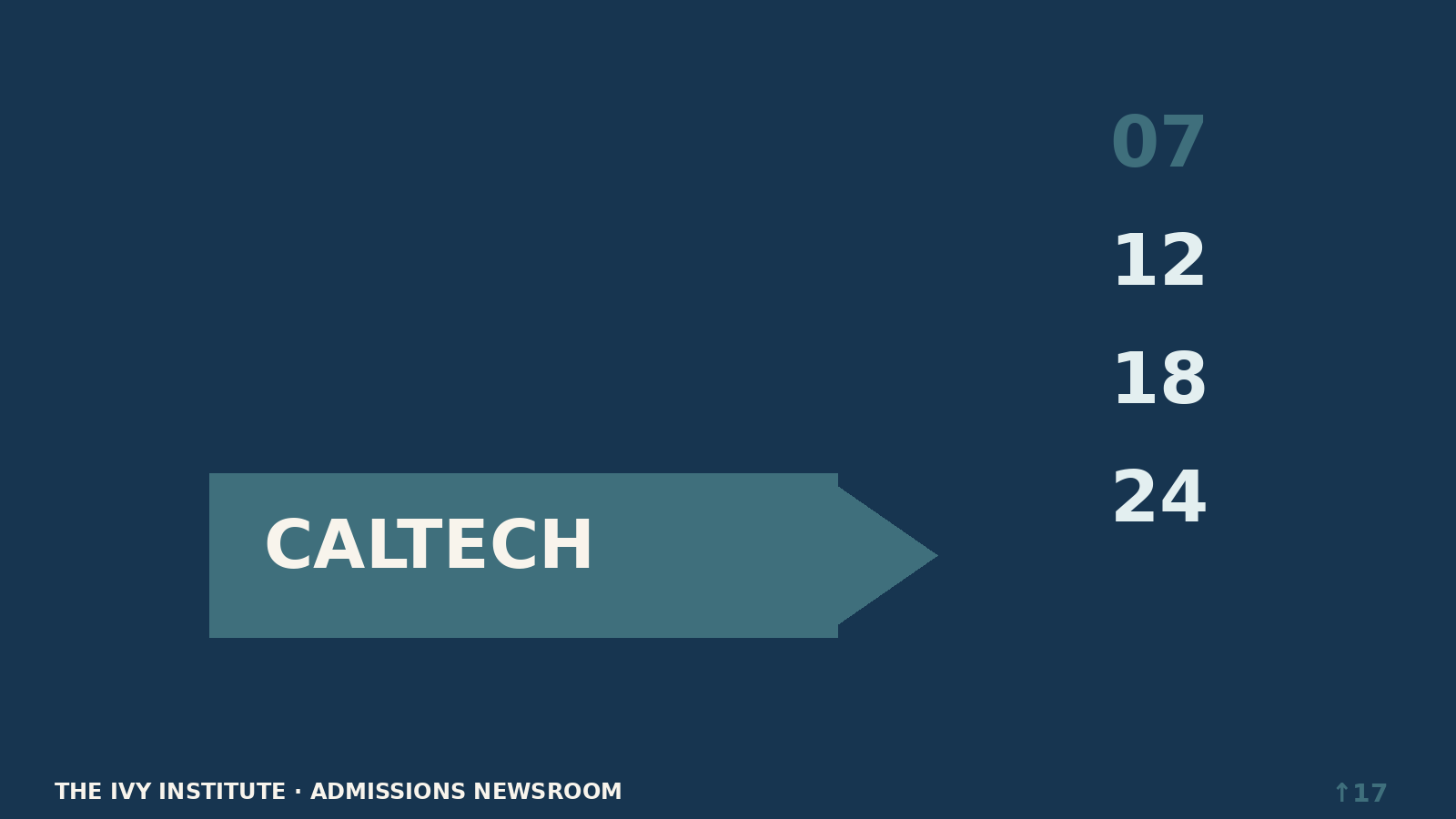
Caltech rose from No. 24 to No. 7 in Forbes’ new ranking. Explore the methodology and learn how applicants should use a dramatic ranking change.

Federal agencies say Berkeley Law discriminated by race; the school denies it. Here is what is alleged, what remains disputed, and what applicants should understand.

UC faculty are formally studying whether to restore SAT or ACT requirements. Follow the decision clock and see what current and future applicants should do.
The University of California is reviewing its A–G admissions requirements. See the timeline, what could change, and how Berkeley and UCLA applicants should plan now.

Community colleges are expanding on Common App. Explore what application growth can—and cannot—tell families about enrollment, access and transfer routes.

Separate institutional accreditation, program approval and licensure. Follow the reform debate and build a checklist for the degree your student wants.

Recover after the Common App reset: review carried-over answers, FERPA, recommendations and college-specific writing with an interactive rebuild checklist.

More Common App members change application counts. Test the admit-rate denominator, distinguish offers from seats, and compare college data responsibly.

Understand the optional Common App circumstances question, its 250-word limit and its context-and-support wording. Plan a concise response without oversharing.

What optional leadership titles change—and what ten activity slots do not. Explore the research and draft a precise account of your real contribution.
Crafting a college application essay is a significant undertaking, but it also presents an opportunity for students to reveal their true selves. By adhering to the dos and don'ts listed above, applicants can create an essay that showcases their unique personality, passions, and aspirations. The college essay should be approached as a journey of self-discovery, an exploration of one's values and experiences that allows the admissions committee to understand the applicant beyond their academic achievements. Remember, the college essay is not just a piece of writing—it's an invitation to share your story with the world. Embrace this opportunity, stay true to yourself, and craft an essay that leaves a lasting impression on the college of your dreams. Good luck on your writing journey!